

Hardwood Floor Installation
The overview of putting a new wood floor into a Torrance home, from picking the type to the walk-on day.
Typically from $7/sq ft
Hardwood floors, install · refinish · repair · Torrance, CA
Hardwood Floors Oak Torrance is a local guide and availability check for hardwood floor installation, refinishing and repair in Torrance: oak strip floors hiding under carpet in 1950s and 1960s tract homes, new engineered planks over concrete slabs, stairs, condos and townhomes, and rental, restaurant, office and studio floors. See typical prices for your own square footage and whether a local installer has bookings open for your ZIP yet.
Notify me when bookings open · typical prices in about 30 seconds
Bookings aren't open yet. Leave your name and number; your message is recorded, and you'll get one message when a local installer is available.
 Illustration
AI-generated illustration. The people shown are not real installers.
Ten home pages, one for each decision: which new floor, how it goes over a slab, how a refinish differs from a recoat and what a repair involves.
The overview of putting a new wood floor into a Torrance home, from picking the type to the walk-on day.
Typically from $7/sq ft

How an engineered plank goes over a concrete slab, which method suits which room, and how the slab is tested first.
Typically from $7/sq ft

Nailed-down boards over a wood subfloor, site-finished or prefinished, and what changes if the floor is a slab.
Typically from $9/sq ft

Zigzag and V-shaped patterns explained: what the cuts mean for waste, the subfloor and the price.
Typically from $14/sq ft

Treads, risers and nosing explained, with the price tiers for new and refinished stairs.
Typically from $500/set of stairs

What a full refinish involves, what it costs by square foot, and how to tell how much wood is left to sand.
Typically from $5/sq ft

What "dustless" really means, how containment works and the questions that tell a real system from a slogan.
Typically from $5/sq ft

The quick refresh that skips sanding, what it can and cannot fix, and why a waxed floor often does not qualify.
Typically from $2/sq ft

Board replacement, gaps, squeaks and pet stains explained, and why a repaired floor is often refinished as a whole.
Typically from $250/repair

What cupping, crowning and buckling mean, why the floor is dried and measured before it is touched, and the repair-or-replace line.
Typically from $100/check

How a business wood floor is matched to its traffic, scheduled around the day and kept on a recoat cycle.

A landlord's guide to wood floors between tenants: recoat what is intact, sand what is not.

Wood floors in busy rooms: the finish for traffic, the closing-day plan and the recoat that keeps it going.

Maple floors for private studios: the wood, the finish, the lines and the price.
 Illustration
Typical total $1,950–$3,500
 Illustration
Typical total $10,300–$18,350
 Illustration
Typical total $1,750–$3,700
 Illustration
Typical total $900–$2,400
 Illustration
Typical total $6,600–$13,800
 Illustration
Typical total $4,800–$10,200
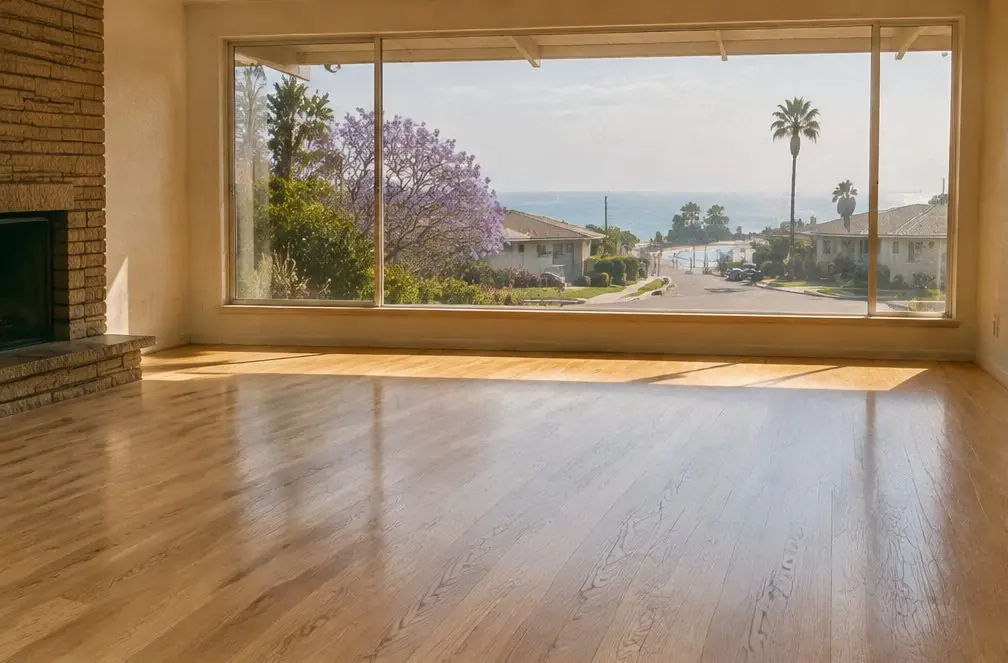
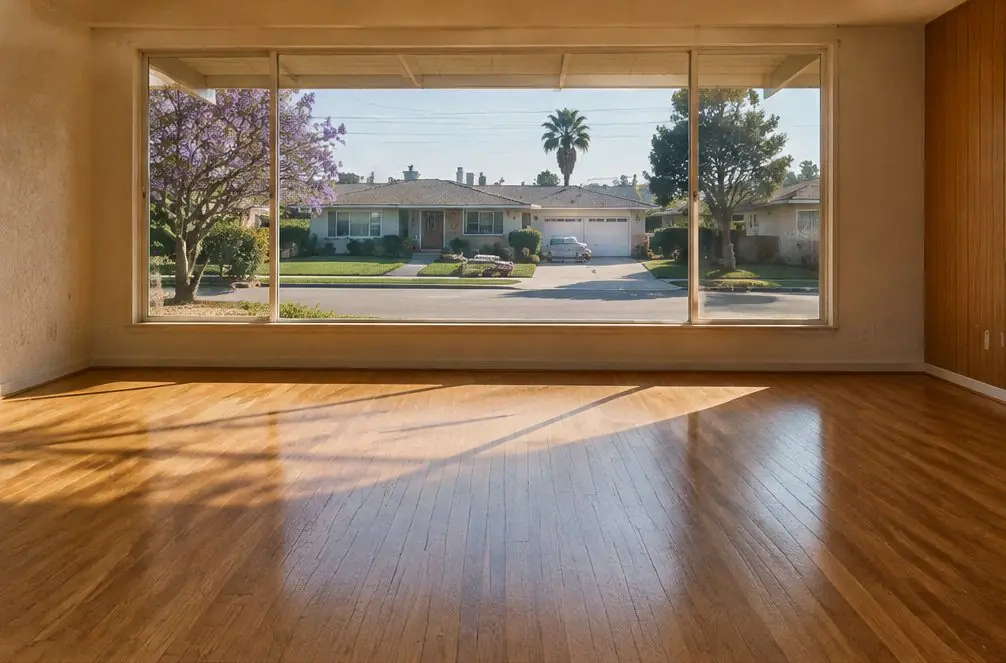
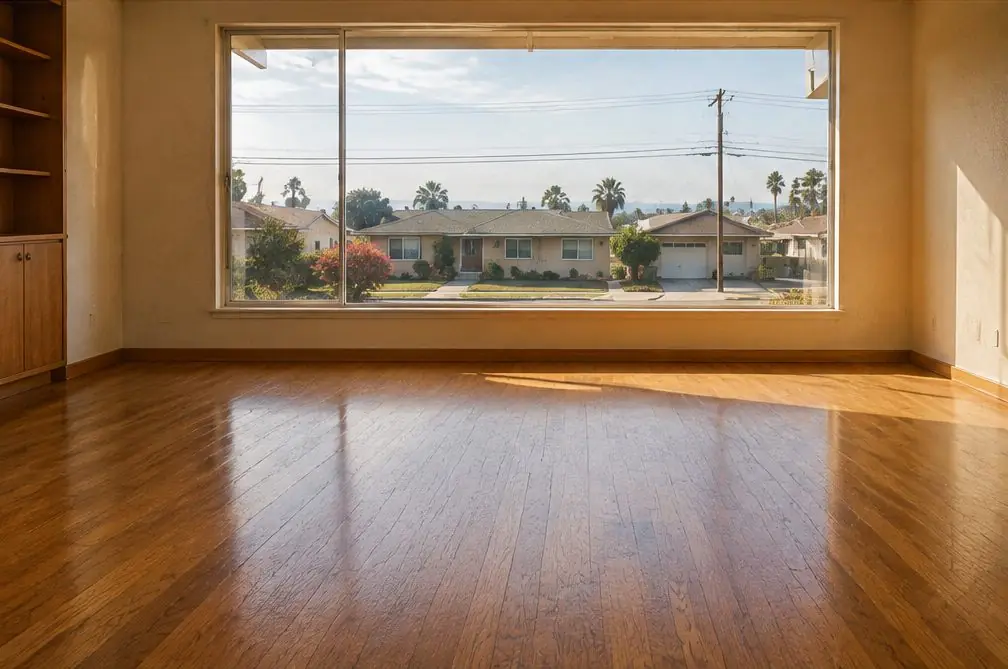
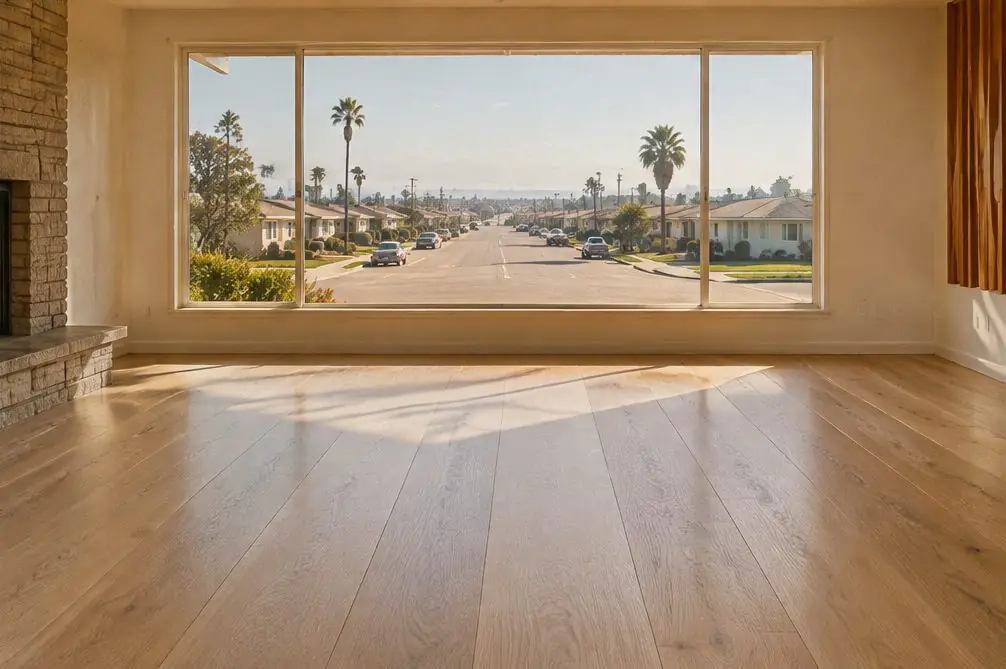
Hypothetical typical projects. Pictures are AI-generated concept illustrations, not photos of completed installations; no installation was performed or arranged through this site; prices are typical Torrance area market ranges, not quotes.
Answer a few quick questions, one at a time: new floor, refinish or repair, or a business or rental floor, then the size and the details. The total updates as you go and uses the same Torrance area market figures shown on every page of this site.
Takes about 30 seconds · no sign-up to see your range
Check availability and get your Torrance area price range
Bookings aren't open yet — a typical Torrance range in about 30 seconds.
Torrance was laid out in 1912 as a planned town and then filled in with tract homes. The 2024 census survey puts the median home at 1966, with about 80% built before 1980 and 52% between 1950 and 1969, so a lot of floors have a story. This table describes what is common by era, not what a particular house has.
| When it was built | Often found | Typical issue | Refinish or replace? |
|---|---|---|---|
| 1910s–1930s (Old Torrance, Walteria) | Narrow oak or fir strip, sometimes a second floor laid on top | Many coats of finish, gaps, worn edges | Often refinishable; a test sand shows how much wood is left |
| 1940s–1960s tracts (Southwood, Seaside, North Torrance) | Oak strip under carpet, often in bedrooms and halls | Carpet tack strip holes, pet stains, faded or gray spots | Often refinish; replace boards where stains go through |
| 1970s–1980s | Carpet or sheet vinyl over wood or a slab, some parquet | Old glue, mastic, uneven patches | Test old mastic first; replacement is common over a slab |
| 1990s and newer, condos and townhomes | Slab with carpet, tile or a builder floor | Association sound rules, moisture on a slab | Usually a new floor; the CC&Rs decide the underlayment |
When carpet comes up, the oak strip underneath is often in better shape than expected, because the carpet shielded it from sun and shoes. Staples, tack strip holes and pet stains are the usual damage, and boards that are stained all the way through are replaced rather than sanded.
Many Torrance homes of the 1950s–60s tracts sit on slab or raised foundations, and the installer checks which. That decides whether solid wood can be nailed down or an engineered floor is glued or floated.
The coast adds a third factor: marine-layer mornings keep indoor humidity higher near the ocean than inland, and boards move with the seasons. Wood is acclimated per the maker's instructions.
A rough guide, not a promise. Measure the wear layer at a floor vent or a removed threshold, or read it from the box.
| Floor | Typical sandings left |
|---|---|
| Engineered, 2 mm wear layer | A screen and recoat, and maybe one light sanding |
| Engineered, 3 mm | Often one or two light sandings |
| Engineered, 4 mm | Often two or three |
| Engineered, 6 mm | Often several |
| Solid, 3/4 in. boards | Usually several over the life of the floor |
—
3/4 in. solid boards usually have about 6 mm above the tongue.
Assumes about 1/32 in. (0.8 mm) removed in a full sanding and a little wood kept above the glue line or tongue. Real floors differ; the maker states the limits.
Pick a species, a stain, a sheen, a plank width and a pattern. It is an on-screen approximation; stain samples on your own floor show the real result.
On-screen approximation; ask for stain samples on your own floor.
Floor stores argue for what they stock, so here is the side-by-side as plain trade-offs. Cost bands are Torrance installed prices for a typical room, from the calculator on this page; the rest is general product behavior, and the maker's instructions for the actual product decide.
| Floor | Typical cost | Where it goes | Sanding left | Where it tends to cause trouble |
|---|---|---|---|---|
| Engineered, standard plank | $7–$12 per sq ft | Wood subfloor or slab, glued or floating | Depends on the wear layer the maker states | Thin wear layer, skipped moisture test, hollow sound if floated badly |
| Engineered, wide-plank white oak | $11–$18 per sq ft | Slab or wood, usually glued or nailed | Depends on the wear layer the maker states | Cupping if the slab is damp; wide boards show gaps in dry weeks |
| Solid, prefinished | $9–$15 per sq ft | Wood subfloor, nailed | Usually several sandings over its life | Micro-bevels collect dirt; boards move with humidity |
| Solid, site-finished | $10–$17 per sq ft | Wood subfloor, nailed, then sanded in place | Usually several sandings over its life | Dust and smell for days, longer wait before furniture |
| Herringbone or chevron | $14–$24 per sq ft | Engineered or solid, glued or nailed | Same as the board type used | Waste from cutting, a flat subfloor needed, many seams |
Cost bands are market estimates, not quotes. Nothing here promises how long any floor lasts; compare the wear layer or board thickness, the moisture plan and the written terms instead.
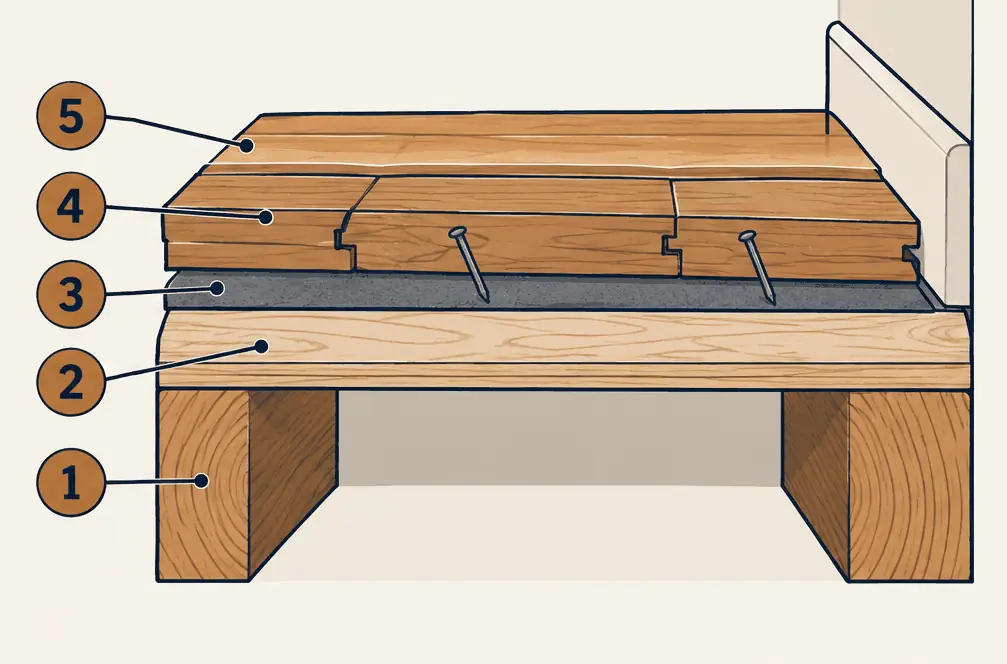
Fits Fits a home with a wood subfloor, and a floor that may be sanded and refinished several times over its life.
Typically $10–$17 per sq ft about $6,300–$11,100 for 600 sq ft, installed
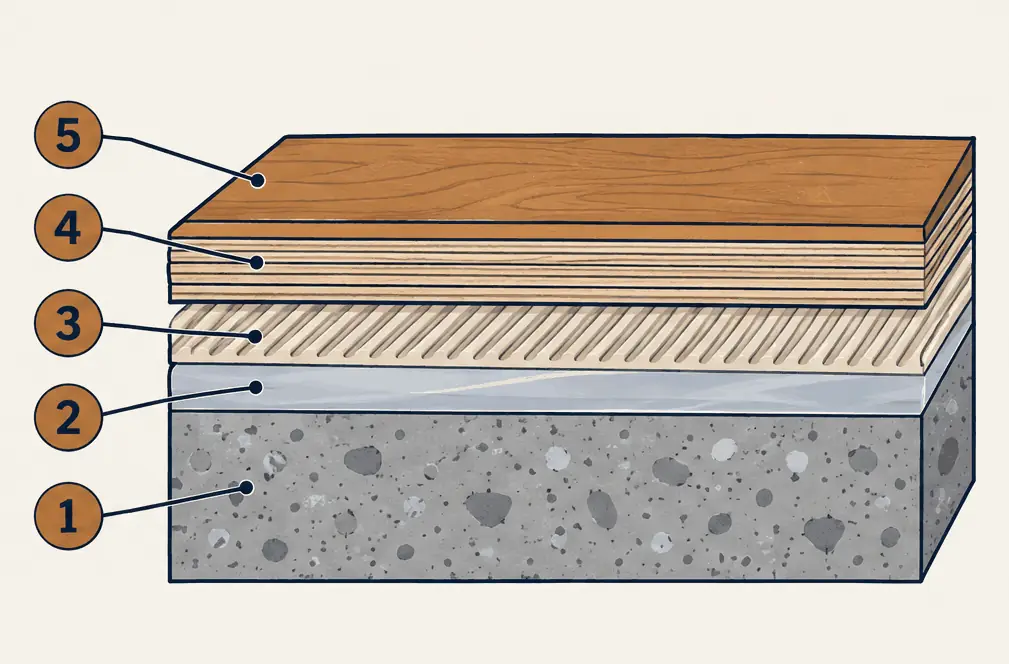
Fits Fits a ground-floor or condo slab where height is tight and a solid, quiet feel underfoot matters.
Typically $7–$12 per sq ft about $5,700–$9,900 for 600 sq ft, installed
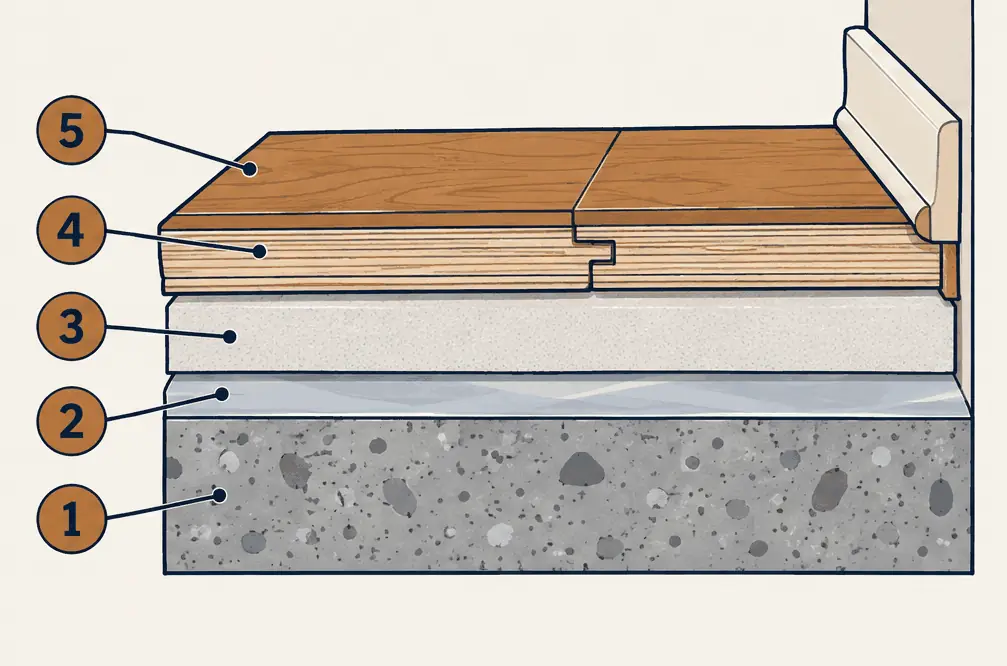
Fits Fits a slab where adhesive is not wanted, or an upstairs unit where an acoustic underlayment is required.
Typically $7–$12 per sq ft about $5,100–$9,300 for 600 sq ft, installed
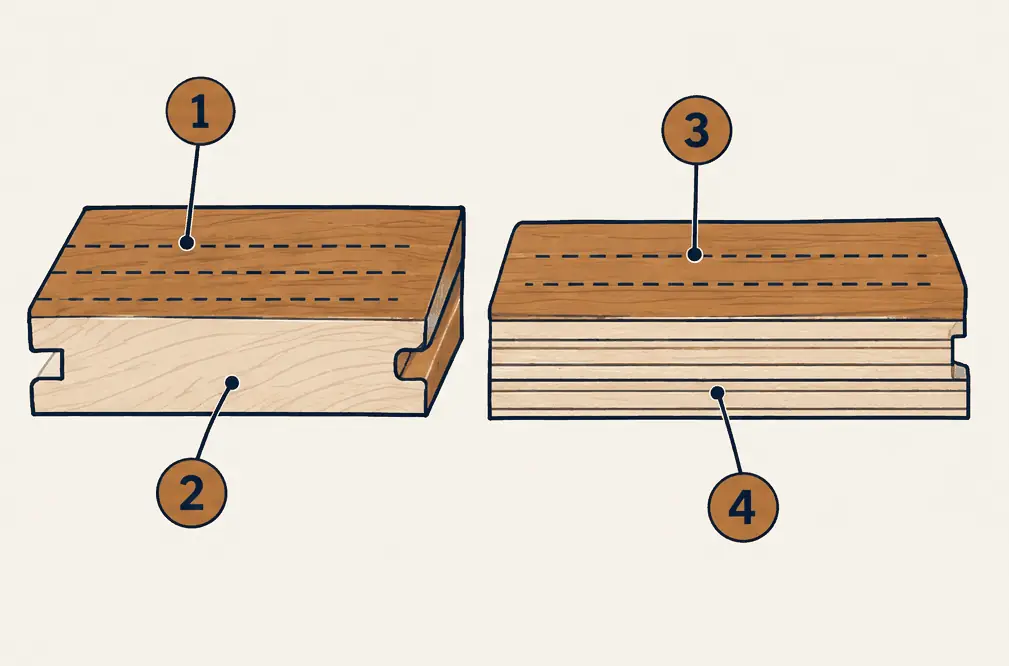
Fits Fits anyone deciding whether a floor can be sanded again: the wear layer or the wood above the tongue is what is left to work with.
Typically $5–$8 per sq ft about $3,000–$4,800 for 600 sq ft, installed
Between tenants, with a few days of gap: recoat what is intact, sand what is not.
High traffic, closing-day scheduling and a finish picked for wear.
After-hours work, phased by zone, with a maintenance recoat cycle.
Maple, sport-style finishes and line paint for dance, yoga or fitness.
Typical order of events; the finish maker's times for the product used, that day's temperature and humidity, and the installer decide. Ventilate, and keep people and pets off until they say so.
Screen and recoat
Sand, natural, waterborne finish
Sand, stain, oil-modified finish
New prefinished floor
 Walk the floorThe floor is measured, tapped for hollow spots, checked for gaps, nail heads, pet stains and old wax, and the stairs are counted before the price is final.
 Close off and protectFurniture comes out, vents and doorways are sealed with plastic, and the sander is connected to a vacuum system that captures most of the dust.
 Sand in passesCoarse, medium and fine grits remove the old finish and level the boards; the edges and corners are done by a separate edger.
 Repair, color, first coatNail holes and small gaps are filled, a stain goes on if one was chosen, and the first coat of finish is rolled out.
 Buff and coat againA light abrasion between coats helps the next one bond; the number of coats and the sheen are set in writing before the job.
 Cure, then move backSocks only at first, rugs and furniture later, pets last, all on the finish maker's times for that day's temperature and humidity.
Check the contractor's license at cslb.ca.gov before signing; work above $1,000 requires one.
In 2026 a typical Torrance range for installed hardwood is about $7–$12 per square foot for standard engineered, $9–$15 for prefinished solid and $14–$24 for herringbone or chevron, before removal, stairs and trim. A 600 sq ft open main floor in standard engineered over a wood subfloor, carpet removed, lands near $4,500–$8,100. These are market estimates, not quotes.
A sand and refinish in natural color typically runs about $5–$8 per square foot in Los Angeles County, so roughly $3,000–$4,800 for 600 sq ft. A color change or deep pet stains add to that, and a screen and recoat costs far less, about $2–$4 per square foot. Market estimates, not quotes.
In many 1950s and 1960s Torrance homes there is oak strip floor under the carpet, but not in all of them. Lifting a corner at a closet or a vent shows it; if it is wood, the boards are checked for stains, staples and thickness before anyone says whether it can be refinished.
Many Torrance homes of the 1950s–60s tracts sit on slab or raised foundations, and the installer checks which. Crawlspace vents outside and a hollow sound underfoot point to a raised foundation; no vents and a hard floor point to a slab.
Engineered hardwood can be glued or floated over a slab, after a moisture test. Solid wood is normally nailed to a wood subfloor, so on a slab it needs a plywood layer or sleepers. The flooring maker's written moisture limits control.
A sand and refinish usually takes several days. People can usually walk on the floor in socks soon after the last coat, rugs and furniture wait longer, and the finish maker's cure times decide. The timeline on this page lists a typical order.
No sanding process is. Many refinishers use sanders connected to a vacuum system that captures most of the dust; some fine dust still settles, so rooms are closed off and cleaned afterward.
Sometimes. A screen and recoat refreshes the finish without sanding to bare wood. It works when the finish is intact and clean; old wax or polish, deep scratches and worn-through spots call for a sanding.
Solid hardwood can usually be sanded and refinished several times over its life. Engineered flooring depends on the thickness of its wear layer, which the maker states. Use the sandings guide on this page for a rough idea.
In older homes, paint on floors or trim can contain lead, and old vinyl tile or black adhesive under an old floor can contain asbestos. Both are tested before sanding or removal.
Many condo associations require an acoustic underlayment that meets a stated sound rating (often given as IIC/STC) before hard flooring goes in upstairs, and some require approval first. The CC&Rs decide.
The site covers rental turnovers, restaurants and retail, offices and private studios, with its own path in the calculator. Schools and public gyms are outside this site.
Homes and businesses across Torrance: Old Torrance, Walteria, Hollywood Riviera, Southwood, Seaside, Torrance Heights and Palo del Amo, West Torrance and North Torrance. The availability check shows whether bookings are open for a ZIP.
Installers featured on this site are independent businesses. The installer's legal name and business details are published on this site before bookings open. Warranty terms, if any, come from the installer and the product maker; ask what is covered, for how long, and what care is required.
Hardwood Floors Oak Torrance covers Old Torrance, Walteria, Hollywood Riviera, Southwood, Seaside, Torrance Heights and Palo del Amo, North Torrance, West Torrance — pick your neighborhood from the menu for local details and ZIP codes.
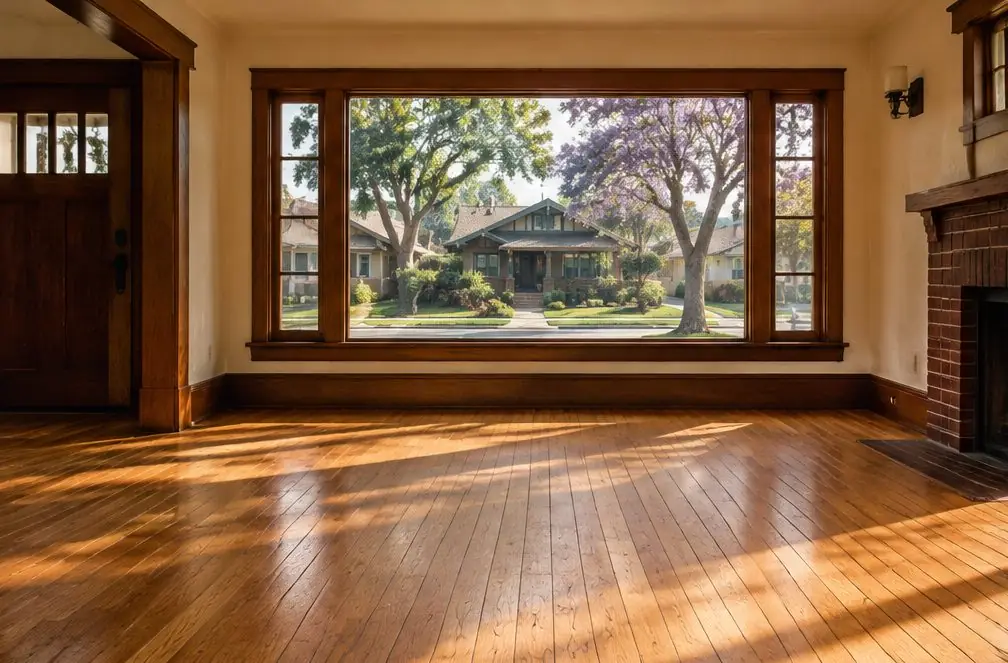
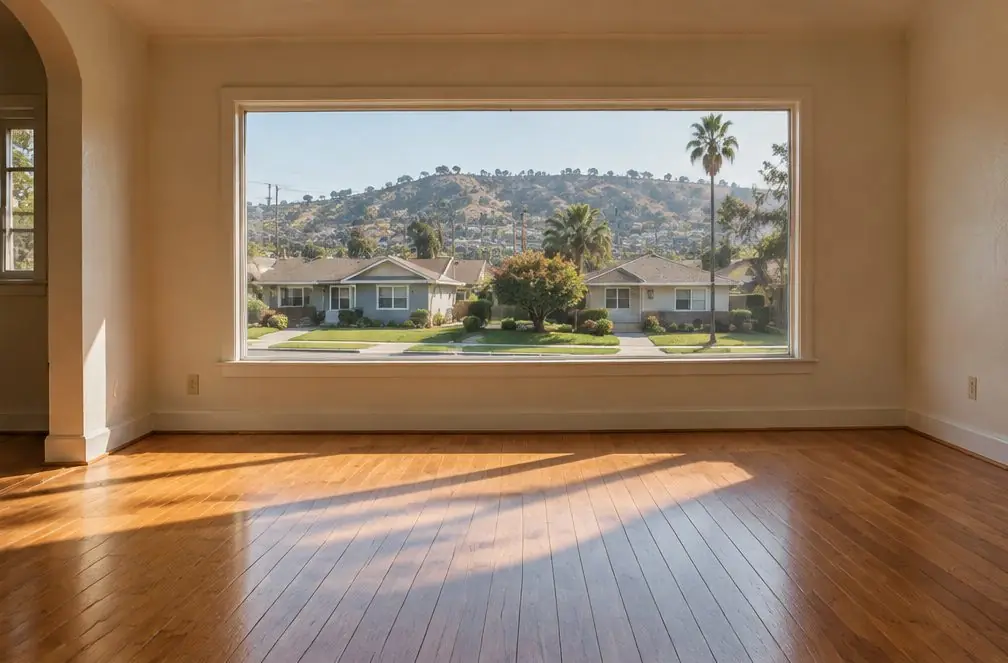
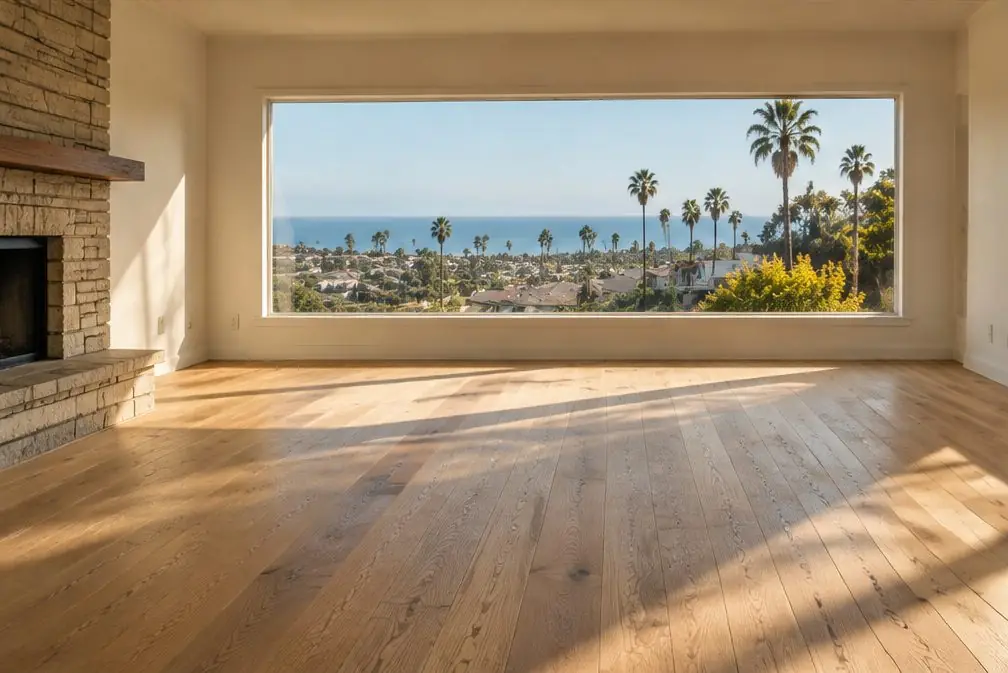
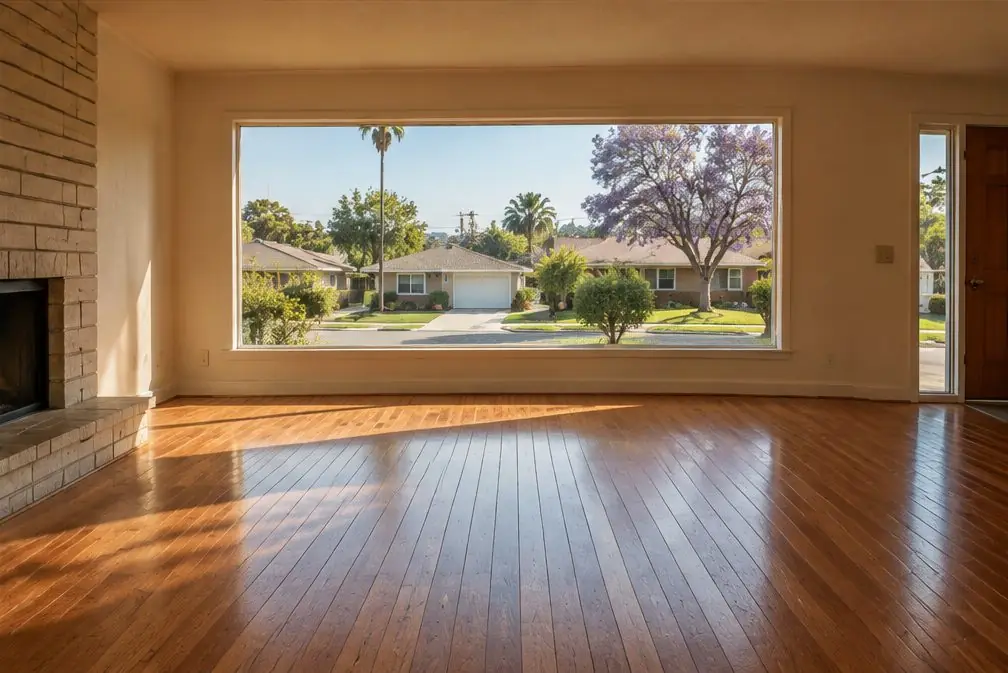
Typical Torrance area hardwood floor prices, square foot by square foot
Pick the job, the size and the details, and see the range. No contact details needed. Bookings open here once a local installer is named on this site.
Bookings aren't open yet. Leave your name and number; your message is recorded, and you'll get one message when a local installer is available.